



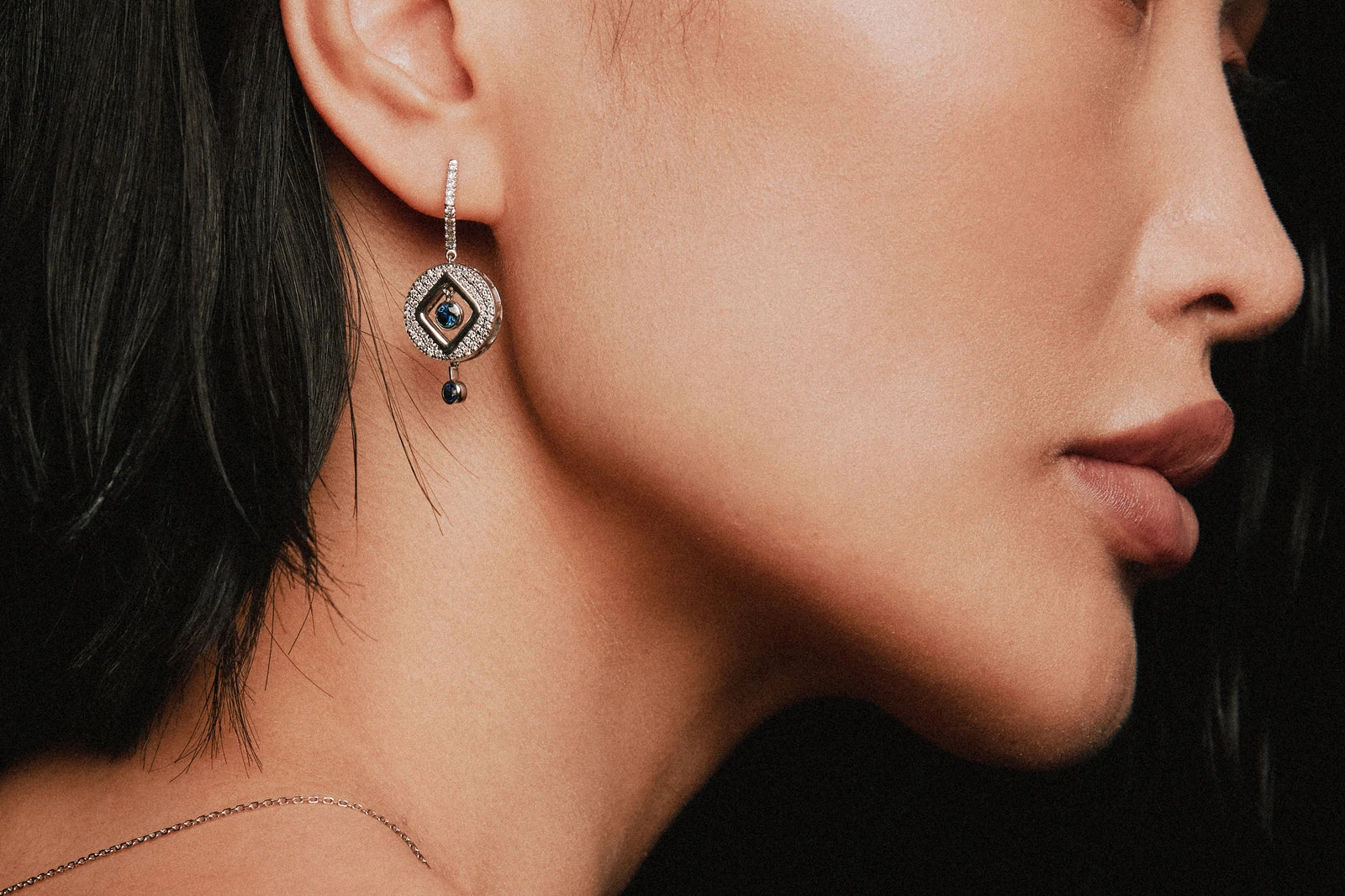

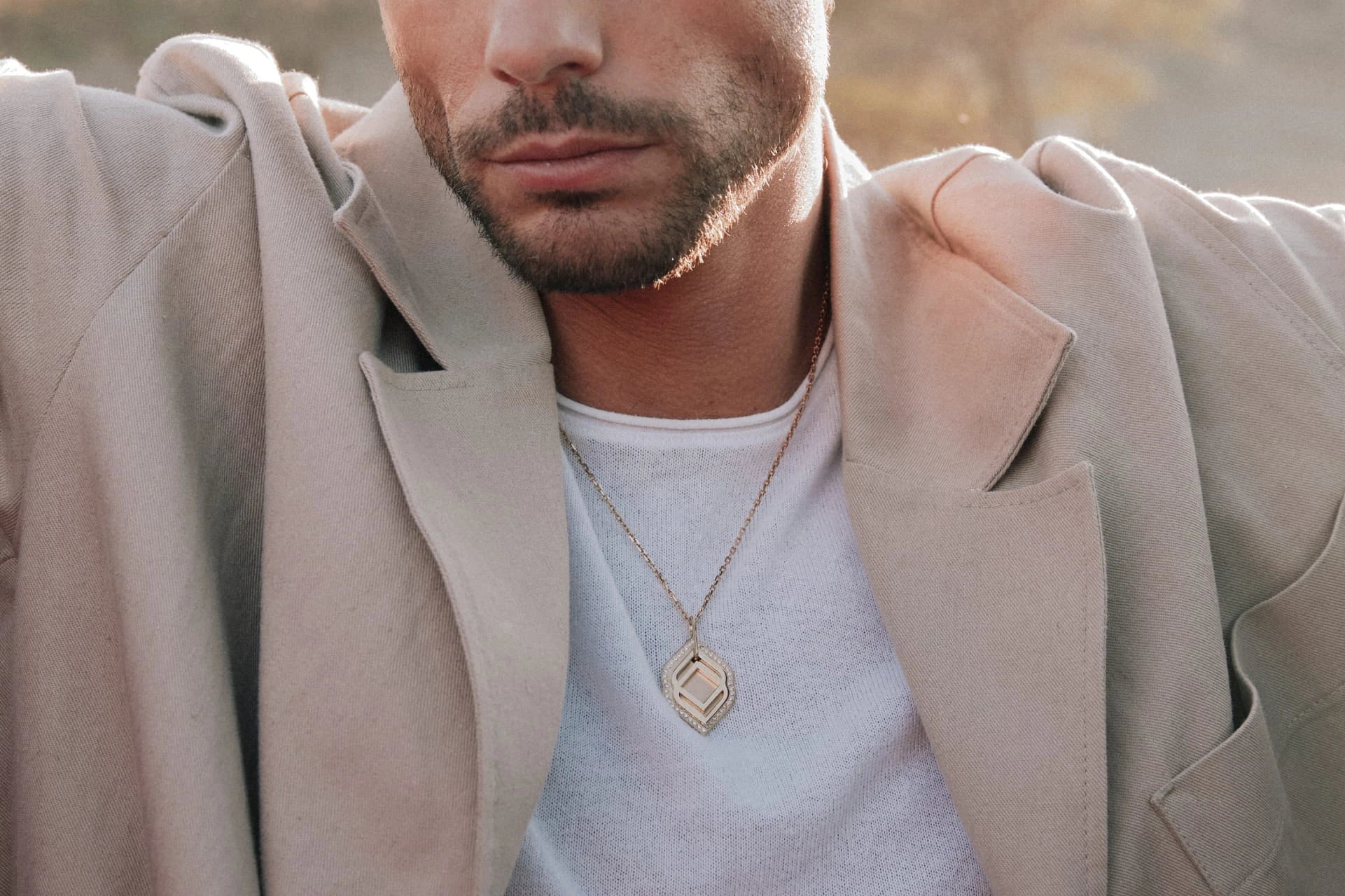

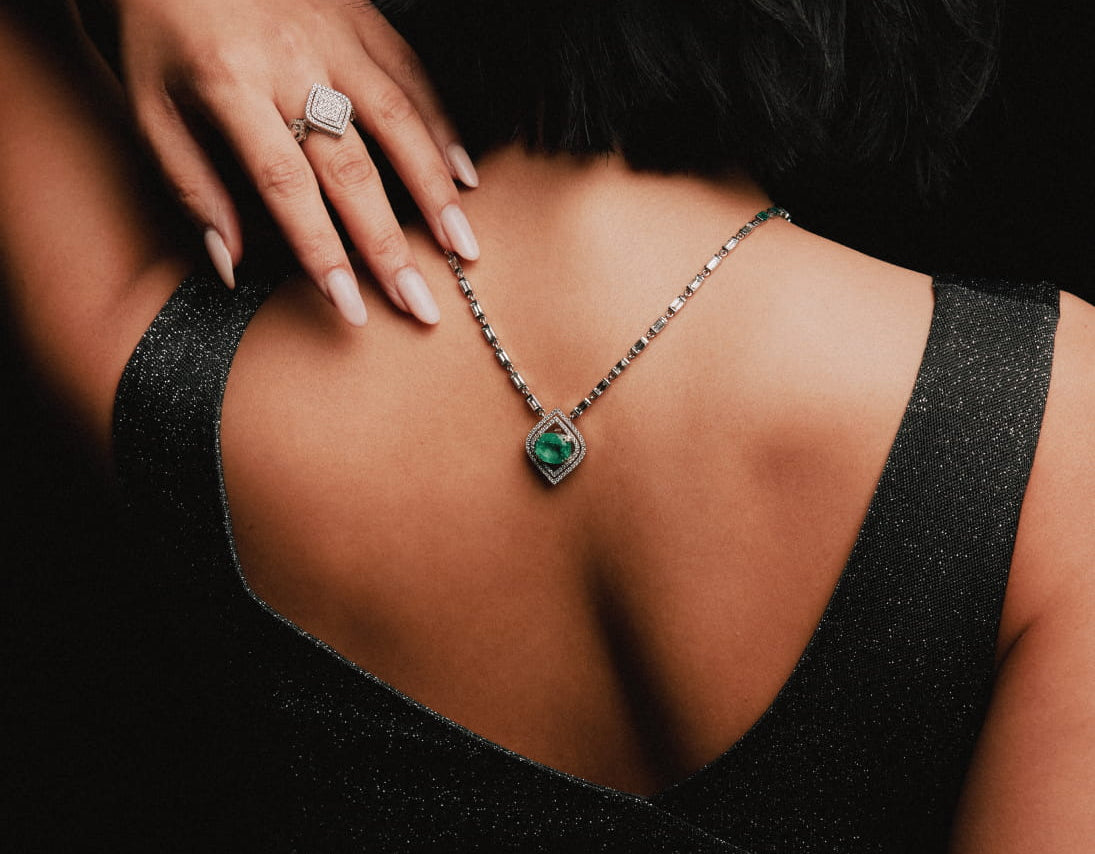

For buyers drawn to bold color, strong form and exceptional gemstones, the more useful question is whether to enter an established design universe or build a jewel around a particular stone and personal brief.
Bvlgari has an unmistakable place in Dubai's luxury-jewelry landscape. Its use of color, sculptural gold and recurring house motifs gives buyers access to a design language that is already fully formed. A personal high-jewelry commission begins somewhere else: with the buyer, the gemstone, the intended use or an idea that has not yet become a finished object. Comparing the two approaches is therefore less about deciding which is “better” and more about understanding what kind of authorship you want your jewel to carry.
Choose according to where you want the identity of the piece to come from. A maison creation offers the strength of established house codes and recognizable design history; a one-of-one commission allows the proportions, gemstones, symbolism and practical details to develop around a particular owner and brief.
The meaningful comparison is not logo versus no logo. It is established design authorship versus personal design authorship.
Why Bvlgari Is a Useful Comparison for Dubai High-Jewelry Buyers
Some competitor comparisons exist only because two brands happen to sell expensive jewelry. This is not one of them.
Bvlgari's design history gives particular emphasis to color, volume and gemstones. Its heritage material describes a move toward vivid combinations of rubies, sapphires, emeralds and a wider chromatic palette beginning in the mid-20th century. Its Serpenti designs provide another example of a house code that has evolved across decades while remaining recognizable.
That makes Bvlgari especially relevant to buyers who are not simply shopping for a diamond solitaire but are interested in high jewelry in Dubai as design—where silhouette, color, stone character and cultural references matter.
A custom studio can work with many of those same building blocks, but the process is fundamentally different. Instead of entering Bvlgari's design language, the aim is to establish the language of one particular piece.
Buyer principle: A strong maison gives you a world to enter. A strong custom commission gives you a world to help define.
What Buyers Mean When They Talk About “House Codes”
House codes are the recurring visual ideas that allow experienced buyers to recognize a designer or maison without needing to read the signature.
They may include:
● specific motifs;
● characteristic volumes;
● preferred gemstone combinations;
● distinctive methods of setting or articulation;
● recurring forms and proportions;
● a recognizable relationship between precious metal and color.
Bvlgari's Serpenti is an obvious example because the serpent form has remained part of the house's identity since the 20th century while being interpreted in different materials and configurations.
For a collector, this consistency has appeal. Buying the piece can mean acquiring not merely a ring, necklace or bracelet, but a recognizable chapter within a larger design history.
What Personalization Means—and What It Does Not Mean
One of the most useful distinctions for luxury buyers is the difference between personalization and custom design.
They are related, but they are not interchangeable.
Personalization changes an existing creation
Examples include engraving a name, date or symbol onto an eligible jewel. Bvlgari currently offers personalization such as engraving on selected pieces, subject to the specific creation and service conditions.
The underlying design remains a Bvlgari design.
Custom design begins before the finished creation exists
A genuine commission can start with a requirement rather than an object.
You might begin with:
● an emerald whose color determines the rest of the palette;
● a desired necklace length and neckline relationship;
● a ring that needs to convert or transform;
● an architectural motif that must be abstracted rather than copied;
● a requirement for movement;
● a family symbol that should remain private;
● a strong preference for asymmetry, geometry or negative space.
That is a materially different creative process from adding personalization after the essential design has already been established.
If You Love Bvlgari, Identify Exactly What You Love About It
This is one of the most useful exercises a buyer can complete before considering any bespoke high jewelry in Dubai.
Do not simply tell a designer, “I like Bvlgari.” That description is too broad to produce an intelligent brief.
Instead, identify the actual visual quality that attracts you.
Is it the use of color?
You may be responding to the contrast between emerald green, ruby red, sapphire blue and warm gold rather than to a specific branded motif.
Is it the volume?
Some buyers are drawn to jewelry that has physical presence—rounded surfaces, generous proportions and forms that feel sculptural from several angles.
Is it movement?
Perhaps the attraction comes from articulation, flexibility or the way the jewel changes as the wearer moves.
Is it the motif?
If you specifically want Serpenti, B.zero1 or another established house design, the most coherent solution is often the authentic house creation rather than asking another jeweler to imitate it.
Design-integrity rule: Custom jewelry should not be a route to reproducing somebody else's recognizable design more cheaply. Its strongest purpose is creating a different design with its own logic.
Bvlgari or Bespoke? A More Useful Comparison Matrix
|
Question |
Maison creation |
Personal commission |
|
Where does the design language originate? |
From the jewelry house and its established creative history. |
From the brief developed between client and designer. |
|
How recognizable is the piece? |
It may contain established motifs or forms associated with the house. |
Recognition may be deliberately private or personal. |
|
Can an exact existing house design be altered freely? |
Options depend on the particular creation and services offered. |
The new design can be developed from the beginning, within technical and material constraints. |
|
What role does the gemstone play? |
The stone is selected and composed within the maison's design philosophy. |
The stone can potentially become the starting point for the entire design. |
|
Who makes the creative decisions? |
Primarily the house's designers, with the buyer selecting among creations and available variations. |
Creative decisions are developed collaboratively between client and designer. |
|
What creates emotional meaning? |
Connection to a historic maison, motif, collection or purchase milestone. |
Connection to the brief, stone, symbolism and process of creating the individual piece. |
For Colored Gemstones, Documentation Requires a Different Mindset From Diamonds
Buyers accustomed to diamond terminology sometimes expect an emerald, ruby or sapphire to arrive with an equivalent version of a diamond grading scale.
That is not how reputable colored-stone reporting works.
The Gemological Institute of America, for example, states that its colored-stone reports can identify the material, indicate whether it is natural or laboratory-grown and disclose detectable treatments. For certain gemstone types, an Identification & Origin Report can also provide an opinion on geographic origin when that determination is possible.
Importantly, GIA specifically says it evaluates emerald rather than grading it.
That distinction matters.
For an important colored gemstone, ask separate questions
- What is the gemstone? Confirm identification.
- Is it natural or laboratory-grown?
- Are detectable treatments present?
- Is geographic origin known, and who determined it?
- What does the seller's description mean? Marketing language should not be confused with independent laboratory conclusions.
- How durable is the stone for the proposed setting?
- How should it be cleaned and maintained?
For emeralds in particular, treatment disclosure can be important because clarity enhancement is common within the category. A beautiful emerald should therefore be evaluated as an emerald—not by borrowing the language used for colorless diamonds.
Identification, treatment disclosure and origin opinion are separate questions in colored-gemstone buying.
A Stone-First Commission Changes the Creative Sequence
One compelling route into custom high jewelry in Dubai is to choose the gemstone before deciding exactly what the finished jewel should look like.
Ezeia's current custom process describes this stone-first sequence: identify or source the stone, develop the design around it, review the design and render, then move to crafting.
This approach can be particularly interesting with colored stones because gemstones are not manufactured to identical visual specifications.
An emerald may have proportions, inclusions, saturation and personality that make one orientation more convincing than another. A sapphire may benefit from a setting that responds to its depth. A pair of colored stones may be close enough to work together but distinctive enough that a perfectly symmetrical design feels unnatural.
The designer's job is not always to force the gemstone into a pre-existing template. Sometimes the stronger result comes from allowing the stone's characteristics to influence the geometry around it.
Information-gain insight: In stone-led jewelry, the setting should solve for the gemstone that exists—not for an imaginary “perfect” stone the sketch assumed would exist.
How to Build a Serious High-Jewelry Brief
When buyers say they want “something unique,” designers still need more information.
Uniqueness is an outcome, not a useful set of instructions.
A better brief covers six dimensions.
1. Visual energy
Should the piece feel graphic, fluid, restrained, architectural, colorful or highly sculptural?
2. Gemstone hierarchy
Is one stone the protagonist, or should several stones operate as a composition?
3. Wearability
Will this be worn at formal events only, to dinners, in professional settings or frequently enough that comfort becomes a dominant design requirement?
4. Personal references
Are there cultural, architectural or family references that matter? If so, should they be immediately visible or abstracted into geometry, color or proportion?
5. Transformation
Should the jewel have one fixed use, or is there value in a convertible or modular idea?
6. Boundaries
Set practical constraints early: approximate budget, preferred metals, dimensions, deadlines and any stones or design directions you do not want.
This does not restrict creativity. It prevents the design process from wasting time exploring ideas that were never suitable.
One-of-One Does Not Automatically Mean Better
The language of bespoke luxury can become exaggerated. A piece being one-of-one does not automatically make it technically excellent, aesthetically coherent or appropriate for the buyer.
A custom jewel still needs:
● sound construction;
● secure stone setting;
● balanced proportions;
● appropriate material choices;
● comfort;
● serviceability;
● accurate documentation;
● a design idea strong enough to justify its complexity.
Equally, a recognizable maison creation should not be dismissed simply because other examples of the design exist. Repetition can be part of what transforms a design into a lasting house code.
Ask Whether You Want Recognition or Discovery
This distinction can clarify the purchase surprisingly quickly.
A recognizable maison piece can create immediate visual recognition among people who know jewelry. That may be exactly what the buyer wants.
A personal commission can operate differently. The piece may invite questions because its origin is not obvious. Its meaning may remain private. The owner may value knowing that the proportion, gemstone or hidden detail exists because of a conversation they helped shape.
Neither motivation is more sophisticated than the other.
The mistake is pretending you value one when you actually want the other.
How Ezeia Fits Into This Decision
Ezeia's approach is particularly relevant when the buyer wants to move from appreciating existing jewelry languages to developing a personal one.
The brand's broader identity connects Latin American artistic energy with Arab cultural and design influences, while its current custom process gives the stone and client brief a central role in the creation.
Buyers can explore the current Ezeia High Jewelry collection to see examples of bolder material and gemstone compositions, then move to the custom design process if the goal is to create rather than select.
Ezeia's current High Jewelry collection also includes an Emerald Unique Piece Set designed as a convertible necklace-and-ring composition. Rather than treating the piece as evidence that one design approach is universally superior, it is useful as an example of a broader question: could the way a jewel transforms be part of the design brief from the beginning?
For Collectors, Think Beyond the Purchase Moment
Collectors often evaluate jewelry differently from first-time luxury buyers.
They may ask how a new piece interacts with what they already own. Another recognizable house motif may strengthen a particular collecting direction—or feel redundant. A one-of-one commission may introduce a color, scale or design idea absent from the rest of the collection.
Useful collector questions include:
● Does this add something genuinely different to my collection?
● Am I buying another version of a visual idea I already own?
● Will I actually wear this scale and color?
● Does the documentation match the significance of the gemstones?
● Can the piece be serviced without compromising its design?
● Is its complexity useful, or merely impressive?
For buyers considering jewelry partly through a collectible-value lens, remember that future resale outcomes vary. Material content, gemstone characteristics, condition, documentation, provenance, design desirability, brand recognition, transaction costs and market demand can all influence outcomes. Jewelry should generally be chosen first because the quality, meaning and wearability make sense for the owner; financial appreciation is never guaranteed.
What GCC Buyers Should Clarify Before Commissioning in Dubai
Collectors and luxury buyers from Riyadh, Jeddah, Doha, Kuwait, Bahrain and Oman frequently encounter Dubai as part of the regional luxury landscape, but commissioning a piece while visiting requires practical planning.
Before approving a design, clarify:
- which stages can be completed remotely after your Dubai visit;
- how render approvals are handled;
- what gemstone and finished-piece documentation will accompany the order;
- how sizing or fit adjustments are managed;
- what current delivery or collection options apply to your destination;
- how future maintenance would be handled if you live outside the UAE.
Cross-border tax, VAT, customs and declaration requirements vary. They should be checked against current official rules for the buyer's own transaction rather than inferred from general statements about shopping in Dubai.
Choose Bvlgari When the House Language Is the Point
If you love a specific Bvlgari creation because it is unmistakably Bvlgari, that is important information.
You are not searching for a generic serpent, colorful ring or sculptural necklace. You may be responding to the house's particular history, execution and visual vocabulary.
In that situation, commissioning another jeweler to make something “similar but different” can weaken the logic of the purchase.
Buy the authentic design you actually admire.
Choose a Personal Commission When Your Own Brief Is the Point
If the idea in your mind does not belong to an existing collection—if it depends on a particular stone, private symbolism, unusual proportion, transformation or personal cultural reference—a custom process becomes more relevant.
The strongest commission should not look like a substitute for a famous piece.
It should look inevitable on its own terms.
The purpose of a bespoke brief is not to imitate an established icon. It is to create a coherent design that has its own reason to exist.
The Better Comparison Is Maison Identity Versus Personal Identity
Bvlgari demonstrates what can happen when a design language is refined across decades. The house's use of color, volume and recurring motifs gives buyers a clear creative world to enter.
A one-of-one commission offers the opposite pleasure. Instead of identifying yourself with an existing visual language, you participate in deciding what the individual jewel should communicate.
For sophisticated buyers, both experiences can belong in the same jewelry collection.
A collector may wear recognized maison pieces alongside commissioned jewelry with no visible signature beyond the owner's own taste. What matters is understanding why each piece deserves its place.
To explore that second path, view Ezeia's high-jewelry pieces or begin with the brand's custom jewelry design process in Dubai.
Frequently Asked Questions
Is personalized jewelry the same as bespoke jewelry?
No. Personalization generally modifies an existing design through options such as engraving or selected variations. Bespoke or custom design can involve developing the underlying jewel itself around an individual brief.
Does Bvlgari offer personalization in Dubai?
Bvlgari currently describes personalization services for selected jewelry, including engraving subject to the eligibility of the creation and applicable service conditions. Buyers should confirm the current options directly with the relevant Dubai boutique.
Can I ask a custom jeweler to reproduce a Bvlgari design?
A strong custom brief should develop an original design rather than reproduce another house's recognizable creation. If you specifically want an established Bvlgari design, buying the authentic house piece is the more coherent route.
Does GIA grade emeralds the same way it grades diamonds?
No. GIA states that it evaluates emeralds but does not grade them using an equivalent diamond-style quality scale. Its colored-stone services focus on identification, detectable treatments and, for eligible stones when determinable, geographic origin.
Should an emerald's country of origin determine whether I buy it?
Origin is one piece of information, not a complete quality judgment. Color, transparency, treatment, size, cutting, condition, documentation and the overall beauty of the stone also matter. Origin should not be used as a shortcut for evaluating the individual gem.
What should I take to a private custom jewelry consultation?
Bring visual references, approximate dimensions or jewelry you already wear, preferred gemstones or colors, practical requirements, budget boundaries and examples of what you dislike. A precise brief does not need to include a finished design.
Can GCC buyers begin a high-jewelry commission while visiting Dubai?
Potentially, yes. Buyers who will return to another GCC country should confirm how later design approvals, collection, delivery, documentation and aftercare would work for the particular commission before proceeding.